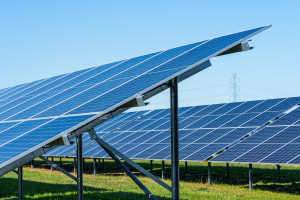
Poland’s photovoltaic farms were forced offline on June 6 and 7, 2026, as grid operator Polskie Sieci Elektroenergetyczne (PSE) implemented non-market redispatch to balance supply and demand. The curtailment reached nearly 2,000 megawatts at peak hours, continuing a trend that has been growing since 2021.
On Saturday, June 6, solar installations were curbed from 8 a.m. to 5 p.m., starting at 300 MW and peaking at 1,715.7 MW before dropping to 447.1 MW. The following day saw even deeper cuts, with curtailment starting at 7 a.m. at 1,235 MW, rising to a high of 1,994.2 MW around midday, and ending at 457.4 MW by 6 p.m.
Non-market redispatch is an emergency measure ordered by PSE to prevent grid instability when generation, especially from renewables, exceeds demand. Poland first experienced this phenomenon during Easter 2021, and the scale has grown significantly since then.
Record curtailment on consecutive days
The weekend’s figures are among the highest recorded for solar curtailment in Poland. On Sunday, the maximum reduction exceeded 1,994 MW, indicating that at that moment nearly 2 GW of solar capacity was deliberately shut down. This highlights the persistent challenge of integrating high volumes of variable renewable energy into a grid that still relies heavily on conventional baseload power.
According to data published by PSE, the curtailment is driven by surplus generation during sunny and windy periods, combined with limited storage capacity and insufficient transmission infrastructure to export excess power.
Annual curtailment figures highlight systemic issues
In 2025, total non-market redispatch of renewable energy in Poland reached an estimated 1,378.7 GWh, according to Forum Energii. Of this, 983 GWh (71.3%) came from limiting solar farms (excluding prosumer installations), while 396 GWh (28.7%) involved wind farms. The growing share of solar curtailment reflects the rapid expansion of photovoltaic capacity in recent years, which now often exceeds demand during spring and summer weekends.
Industry observers note that without significant investments in energy storage, grid modernization, and demand-side flexibility, such curtailment events will become more frequent and larger in magnitude. The Polish government has announced plans to support battery storage and grid upgrades, but implementation remains slow.
Źródło: WNP.PL, Fot. PGE