France has chosen not to implement broad tax cuts on fuel, instead targeting its financial support exclusively at low-income workers who depend on their cars to commute. The policy, extended for another month by Prime Minister Sebastien Lecornu, offers a one-time payment of 100 euros, but with nearly 636,500 applications already filed, the measure is proving far less popular than across-the-board price reductions would be.
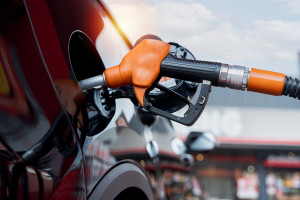
According to data from the French Ministry of Economy, Finance and Industrial Sovereignty, fuel consumption in May 2026 fell by 12% year-on-year, following an 11% drop in April. The continued decline is driven by record-high prices at the pumps, with a liter of unleaded SP95-E10 costing between 1.987 and 2.02 euros (approx. 8.75 PLN) and diesel ranging from 1.99 to 2.05 euros (approx. 8.90 PLN).
A targeted approach instead of tax cuts
Unlike many EU member states that have slashed fuel taxes to ease the burden on all drivers, the French government has stuck to a means-tested subsidy. Only employees with low incomes who drive to work can claim the 100-euro payment. Prime Minister Sebastien Lecornu announced the extension of the system for another month, but the scheme’s uptake – 636,500 declarations by June 2 – is modest compared to the number of households that would benefit from a universal reduction.
– We are focusing our help where it is needed most, on those who cannot avoid using their car to get to work and for whom fuel costs are a significant part of their budget – stwierdził premier Sebastien Lecornu.
The government argues that broad tax cuts would be fiscally irresponsible and would primarily benefit higher-income households. However, critics say the targeted approach fails to address the widespread pain felt across society, especially as fuel prices remain stubbornly high.
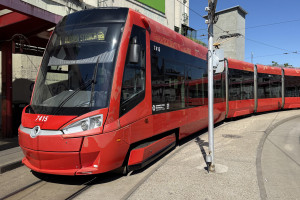
Boom in trains and public transport
The high fuel prices are reshaping mobility patterns. Train reservations in May jumped by 16% year-on-year, and the number of people using public transport and carpooling has also increased significantly. The shift is a positive development for the environment, but it is creating a serious hole in state finances. The Treasury is losing an estimated 300 million euros per month in tax revenues from fuel sales, which threatens the government’s target of reducing the budget deficit to 5% of GDP this year.
For now, the government insists that the targeted fuel subsidy is the right tool, but the persistent drop in consumption and rising budget pressure may force a rethink in the coming months.
Źródło: WNP.PL, Fot. jittawit / Shutterstock