Poland has recorded impressive growth rates in air cargo, surpassing traditional aviation powers like Turkey and France in percentage terms over recent months. The driving force is a surge in e-commerce imports from China, which have boosted volumes at Polish airports despite the country still holding only about 1.4 percent of the European air cargo market.
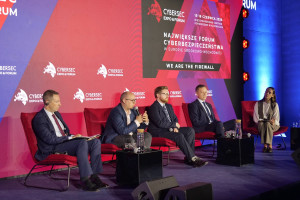
Data presented by WorldACD during the TIACA Executive Summit 2026 in Warsaw shows that global e-commerce exports from China grew by 7 percent year-on-year in the first months of 2026. For European markets alone, the increase was a striking 30 percent. Poland, Hungary and the Czech Republic are leading this growth in Central and Eastern Europe.
Ken de Witt Hamer, president of WorldACD Market Data, highlighted that the crisis in the Middle East, triggered by the war in Iran, had grounded much of the civil aviation in the Gulf states. European markets, however, largely recovered and are now performing close to normal levels. Poland’s percentage gain in air cargo volumes from January to May 2026 placed it ahead of such established players as Turkey and France.
Chinese e-commerce fuels the boom
The simple explanation for Poland’s jump is the boom in parcel shipments from China. – The answer is very simple: e-commerce. That’s it. E-commerce is the main driver of our market growth – said Michał Grochowski, head of LOT Cargo. Last year Warsaw Chopin Airport handled 137,000 tonnes of cargo, an increase of 17 percent. Yet this is still modest compared to the 426,519 tonnes handled by Budapest Airport in 2025, a 42.3 percent jump. Józef Kossuth, head of cargo at Budapest Airport, said the lack of a national carrier means the airport can freely open up to foreign operators and grant them unrestricted traffic rights.
Mariusz Kuczek, director of cargo development at Katowice Airport, noted that the greatest potential in the region is concentrated in Poland, Hungary and the Czech Republic. He said that Central Europe should not just feed existing hubs in Western Europe, but develop its own cargo hubs, direct connections and specialised services. According to Kuczek, the aim is not to replace Frankfurt or Amsterdam, but to reduce excessive dependence on them.
LOT Cargo at a crossroads – to buy a freighter or not?
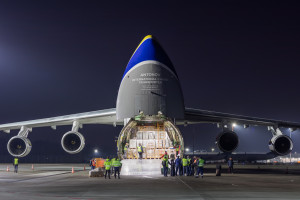
LOT remains Poland’s largest air cargo carrier, but its market share has slipped to around 20 percent. Foreign operators, especially in the import segment, are gaining ground. The Polish carrier relies entirely on belly cargo in passenger aircraft, which limits the type and volume of goods it can handle. For years, industry leaders have urged LOT to acquire a dedicated freighter aircraft. At the Warsaw summit, Michał Grochowski publicly acknowledged for the first time that the company is analysing the possibility of entering the all-cargo segment. – A decision will depend on profitability and global market conditions. Introducing freighters shifts the business risk to another level – he said.
Grochowski added that while a freighter offers the whole deck without height limits and allows dangerous goods that cannot be carried with passengers, the company must be certain there is sufficient market demand to justify the investment. Poland’s long-term forecasts show cargo volumes reaching 0.38 million tonnes by 2032 and 1 million tonnes around 2041 – still less than what Germany’s airports handle today. The German market accounts for over 20 percent of European air cargo. Poland still faces structural barriers: many foreign-owned factories in the country do not control their own logistics or supply chains, with decisions made abroad.
Without better data – the Civil Aviation Authority publishes figures with a significant delay – Polish cargo companies struggle to plan effectively. Yet the direction is clear: Chinese e-commerce is reshaping the market, and Poland must decide whether to remain a feeder or build its own independent air cargo hub.
Źródło: WNP.PL, Fot. Materiały prasowe / GTL SA / Piotr Adamczyk