The Polish government has approved a 3% increase in public sector wages and the national minimum wage for 2027, alongside a minimum 3.48% pension indexation. With inflation forecast at 2.5%, these raises outpace inflation but remain below the projected average wage growth of 5.6% across the national economy.
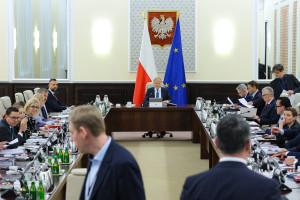
The Council of Ministers adopted the macroeconomic assumptions on June 9, laying the groundwork for next year’s state budget. The minimum wage is set to reach 4,950 PLN gross. The government declared that even if the statutory formula for pension indexation yields a lower figure, it will still apply the 3.48% increase. However, if the formula results in a higher raise, that higher value will take precedence.
GDP growth is expected to slow to 3.1% in 2027, down from 3.6% this year. These projections are crucial for estimating VAT and PIT revenues. The government may adjust the assumptions in September if the economic situation changes significantly.
Wage hikes and pension indexation
All three categories – public sector wages, the minimum wage, and pensions – will see real increases since they exceed the 2.5% inflation target. Yet they trail the 5.6% average wage growth expected in the private sector. The minimum wage formula mandated a minimum rise of 1.1%; the government opted for a more generous 3%.
For pensioners, the guarantee of at least 3.48% indexation provides certainty. Nevertheless, the overall purchasing power of these groups will improve only modestly compared to the broader economy.
Oil prices and corporate bonds
Brent crude briefly dipped below $90 a barrel on Tuesday, the first time since April 21, as tanker traffic in the Strait of Hormuz gradually resumed. US Energy Secretary Chris Wright described the increase as „very significant”. Several supertankers from Iraq were detected on the other side of the strait, loaded with crude and heading to customers. Kuwait also resumed oil sales to Asia, offering 4 million barrels. However, prices later rebounded 4% after President Trump claimed Iran had shot down a US helicopter, escalating tensions again. Brent settled at around $92 a barrel.
Meanwhile, Hungarian oil group MOL announced plans to issue bonds denominated in Polish zloty. Although Polish interest rates are slightly lower than Hungarian ones (5.38% vs 5.44% for five-year bonds), the move likely reflects MOL’s significant revenue stream from its Polish operations, including over 400 former Lotos stations. Issuing debt in PLN allows MOL to fund local investments and diversify its borrowing structure beyond forint and euro.
The Polish parliament also moved forward with the Individual Investment Accounts (OKI) bill, which would exempt capital gains from stock market investments up to 100,000 PLN from income tax. Above that threshold, a small asset tax of 0.85% in 2027 would apply. The bill aims to channel savings into equities. Separately, the government approved a draft law mandating that large listed companies ensure at least one-third of board and supervisory board positions are held by the underrepresented gender. The rules apply to firms with at least 250 employees and annual turnover above €50 million.
Źródło: WNP.pl, Fot. PAP/Paweł Supernak