Poland is moving closer to selecting a contractor for its second large-scale nuclear power plant, with four potential locations still under consideration. Minister of Energy Miłosz Motyka has stressed that the decision will be based on economic and technological criteria, not political preferences. The contractor selection is expected in 2027, followed by a final location decision in 2028.
The update to Poland’s nuclear energy program (PPEJ) has been completed, confirming the country’s ambition to build between 6 and 9 GW of nuclear capacity. The first plant in Choczewo, already under development with Westinghouse-Bechtel, will deliver around 3.7 GW. The second plant is to be built in the 2030s, and its location will be chosen from four sites: the preferred locations are Bełchatów and Konin, with Kozienice and Połaniec as reserve options.
Four potential partners and a strict timeline
Minister Motyka made it clear that the government will not favor any bidder based on politics. – We will not politically choose anyone who offers worse terms. Worse in terms of price, worse in terms of the involvement of Polish companies, and worse in terms of capital commitment – he said during the PPEJ presentation. Four nuclear technology providers have been invited to take part in the dialogue: American (Westinghouse), Canadian (likely Candu), South Korean (KHNP), and French (EDF). The partner and technology are to be selected in 2027, and the final location in 2028.
Deputy Energy Minister Wojciech Wrochna explained that the negotiation of the EPC contract for the first plant is progressing faster than typical for such projects. – For this type of contract, the estimated negotiation period is 24 months or more. We are negotiating in less than a year – he noted, citing the Barakah plant in the UAE as a rare example of a swift completion.
Local content goals and state coordination
The updated program sets ambitious local content targets: 40% for the first nuclear plant in Choczewo and 70% for the second. Minister Motyka emphasized that these targets are not rigidly embedded in the EPC framework but remain a key selection criterion. The state-owned company Polskie Elektrownie Jądrowe (PEJ) will coordinate the second plant project, with the Polish Energy Group (PGE) playing an important role – though without being an equity investor. – PGE’s strategy assumes participation in the nuclear program in terms of location with technology, but without investment involvement – said Wrochna.
The final version of the PPEJ will be published within days and is expected to be adopted by the Council of Ministers in July. The decisions on the second nuclear plant will be crucial for Poland’s long-term energy security and its transition away from coal. – Energy security cannot be built for years without nuclear power – Motyka concluded.
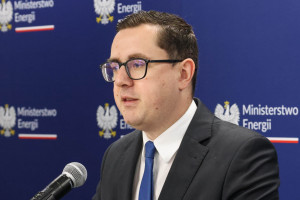
Źródło: WNP.PL, Fot. Albert Zawada / PAP