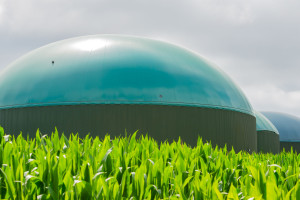
The number of agricultural biogas plants in Poland has risen to 209, with a combined electrical capacity of 188.8 MW, according to the latest data from the National Agricultural Support Centre (KOWR). In 2025, producers generated 515.2 million cubic meters of biogas and introduced 2,500 cubic meters of biomethane into the gas grid.
KOWR’s register as of May 28, 2026, includes 203 installations producing electricity and heat, two producing biomethane alongside electricity and heat, and four dedicated solely to biogas. Total annual capacity reaches 840 million cubic meters of biogas and 11 million cubic meters of biomethane. The installed capacity stands at 188.8 MW for electricity and 5.5 MW for biomethane. The facilities belong to 175 entities.
Feedstock composition – over 90% from waste
In 2025, nearly 7.7 million tons of raw materials were used for biogas production. The largest shares were distillery stillage (20.38%), slurry (16.59%), and fruit and vegetable residues (14.75%). Waste materials accounted for approximately 91% of all feedstock. From these substrates, producers obtained 515.2 million cubic meters of biogas, of which 482.5 million cubic meters were used to generate electricity.
Power generation and biomethane injection
The biogas yielded 1,080.969 GWh of electricity, with 903.525 GWh sold to obligated suppliers and other buyers. The remainder was consumed for on-site production needs and own use. In 2025, 2,500 cubic meters of biomethane were produced and fully injected into the gas network. The two biomethane plants have a combined capacity of 5.5 MW.
Of the total biogas produced, about 93.6% was directed to power generation. The rest was flared or burned in a gas boiler. The process also generated over 6.1 million tons of digestate, a nutrient-rich by-product used as organic fertilizer.
According to KOWR, the growth in biogas plants is supported by the availability of agricultural waste and the need for stable renewable energy. Poland’s agricultural biogas capacity is expected to expand further as more farmers invest in on-farm digesters.
The data confirms the steady expansion of agricultural biogas in Poland’s renewable energy portfolio, driven largely by waste-based substrates.
Źródło: WNP.PL, Fot. Shutterstock