
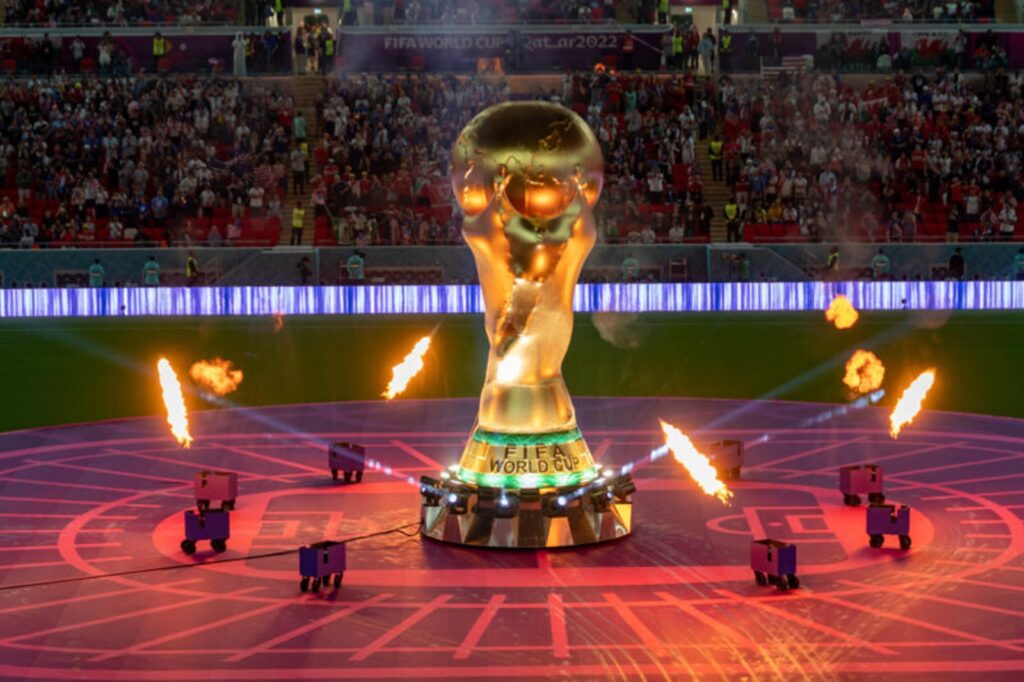
There is no other event in the world that within just five weeks can mobilise billions of people, build temporary cities around stadiums and reshuffle billions of dollars between industries. The 2026 FIFA World Cup, hosted by Canada, Mexico and the United States, is not only a sporting celebration but above all the best‑oiled global commercial machine. The tournament will generate global economic growth of $40.9 billion and create 824,000 jobs worldwide.
From sponsorship contracts to TV sales in retail stores, from tickets in the stands to beer in local bars, the World Cup drives every level of the economy. In 2026, for the first time in history, the tournament is being held across three North American countries, which has changed the commercial model compared with previous editions. Instead of huge infrastructure investments as in Qatar, this time the money comes solely from consumption and visitor spending, creating new challenges and opportunities for industries around the world.
At the foundation of the tournament’s financial success lie the commercial rights that FIFA sells in a strictly hierarchical system. The sponsor pyramid consists of four levels. At its top is the group of FIFA Partners – a handful of global giants that pay the most and in return receive rights to all competitions organised by world football’s governing body.
In 2026, these are brands long inseparable from the sport: Adidas as the match ball supplier, Coca‑Cola, Hyundai‑Kia, Aramco, Lenovo, Qatar Airways and Visa. Below them is the next tier, FIFA World Cup Sponsors – companies that have bought global rights exclusively for this year’s tournament. Here we find Bank of America, McDonald’s, Verizon, AB InBev, Frito‑Lay, Hisense, Unilever and Mengniu Dairy.
Lower down are regional and local Tournament Supporters – entities whose rights cover only specific continents or countries. Among them are such diverse brands as Airbnb, DoorDash, The Home Depot, Salesforce, Diageo and the investment fund PIF. This entire complex international structure was finalised before the first whistle. In March 2026, FIFA announced that all 16 global sponsorship packages (7 partners and 9 sponsors) had been sold, the best commercial result in the federation’s history.
Billboards and cooling breaks
FIFA’s new sponsorship model, introduced in 2023, has significantly increased advertisers’ appetite. Instead of one rigid package, corporations can now buy separate rights for men’s, women’s or e‑football, allowing them to target specific audiences precisely. The North American hosting has however brought a revolution in the advertising space itself, unlike anything seen before.
For the first time in World Cup history, so‑called cooling breaks have been used on such a scale. In matches played in the July heat, referees regularly stop play, which in the past was purely a technical matter. Today, that is paid advertising space worth tens of millions of dollars.
In addition, half‑time breaks in final matches have been extended and the kick‑off time shifted 11 minutes deeper into the schedule, creating an extra window for commercials that did not exist before. As a result, advertising revenues have risen by nearly $300 million compared with the 2022 tournament in Qatar.
Broadcasting rights
If asked about FIFA’s largest source of revenue, the answer is television broadcasting rights. In 2026, the federation expects about $3.9 billion from this source. Over the entire four‑year business cycle that includes the World Cup, broadcasting revenues will reach approximately $4 billion.
Europe remains the largest market, with the value of media rights estimated at $1.4 billion. In the United Kingdom, where BBC and ITV compete, contract values exceed $350 million. In the United States, where rights are split into two streams – Fox paying $480 million for the English‑language version and Telemundo $465 million for Spanish – total revenues exceed $1 billion.
FIFA’s biggest problem with media rights, however, is timing. Matches are played in North American time zones, meaning that in Asia and Eastern Europe many matches take place at three or four in the morning. As a result, the total number of signed contracts with broadcasters fell from 495 in 2022 to just 443 in 2026.
For Asian broadcasters, this means a drop in the value of a single match of nearly 20 percent, forcing FIFA to cut prices in China from $250 million to just $60 million, and in India to about $25 million. The only beneficiaries were broadcasters in South America and the Caribbean, who recorded an 18 percent increase in the number of contracts.
Millions in the stands, billions in the till
FIFA’s biggest commercial revolution has been in ticket and premium hospitality sales. Revenues in this segment are expected to more than triple compared with Qatar, from just under $1 billion to over $3 billion. The tournament will be attended by about 6.5 million spectators – some forecasts even say 7 million.
Fans will spend an average of $416 per day over a 12‑day stay, totalling nearly $14 billion. Also significant is FIFA’s introduction of an official ticket resale platform. Secondary transactions are legal, but each change of ticket ownership is subject to a 15 percent fee for both parties, a total margin of 30 percent.
More than just football
Although the big companies attract attention, the real pulse of the global economy is felt in industries that at first glance have nothing to do with football. A surge in viewership of several hundred percent just before the tournament traditionally drives sales of televisions and home appliances, as fans want to upgrade to larger, more modern screens. The food industry sees increases in beer, soft drinks and snacks such as crisps and nuts.
Local restaurateurs and food delivery providers, including official sponsor DoorDash, compete to serve meals to the temporary towns around the stadiums. Even the construction industry feels the World Cup effect indirectly. As an expert from Sport Management Polska notes, during major tournaments Poles renovate their homes en masse to watch matches in better comfort with family and friends.
Poland’s absence from the tournament means tangible losses for this sector. The effect would have been three times greater had Poland qualified.
A new commercial era
When the football World Cup was held in Qatar in 2022, that country spent over $200 billion building infrastructure from scratch. The North American tournament is a completely different model. It does not require the construction of new stadiums, roads or hotels, because the infrastructure already exists. All the money flowing through the economies of the three host countries comes solely from consumption and spending, not from state investment.
For the United States, where GDP grows at 2‑3 percent annually, the $17.2 billion impact is just 0.1 percent of GDP. For Canada, where the forecast impact is C$3.8 billion, that is a more noticeable value. For Mexico, a much smaller country more dependent on tourism, revenues of about $3 billion could represent a visible boost.
The tournament will generate global economic growth of $40.9 billion and create 824,000 jobs worldwide. Hotel room rates in American cities will rise by an average of 90 percent, and tickets will cost as much as $10,000.
The 2026 World Cup is a classic example of how sport can be simultaneously a spiritual celebration and an extremely precise global financial transaction. It is not only 48 national teams competing for a trophy, but also 6 billion people watching commercials and at least $13 billion flowing from fans’ pockets into the tills of large corporations and local economies. That money will be – and already is being – distributed.
Fot. Rawpixel


